
THE MYTH OF THE MAD LEADER
By Rossella Forlè
Right now, the world is watching a war that already feels normal. A fragile ceasefire in Iran that could collapse at any moment. Oil routes blocked, economies destabilising, entire regions pushed further into chaos and at the centre of it, once again, Donald Trump—threatening escalation, improvising strategy, dominating headlines. But something else is happening: his approval is collapsing, public trust is eroding, and even his own narrative is starting to crack, and so the framing returns, right on cue: He's unstable, he's reckless, he's unfit. The problem is him.
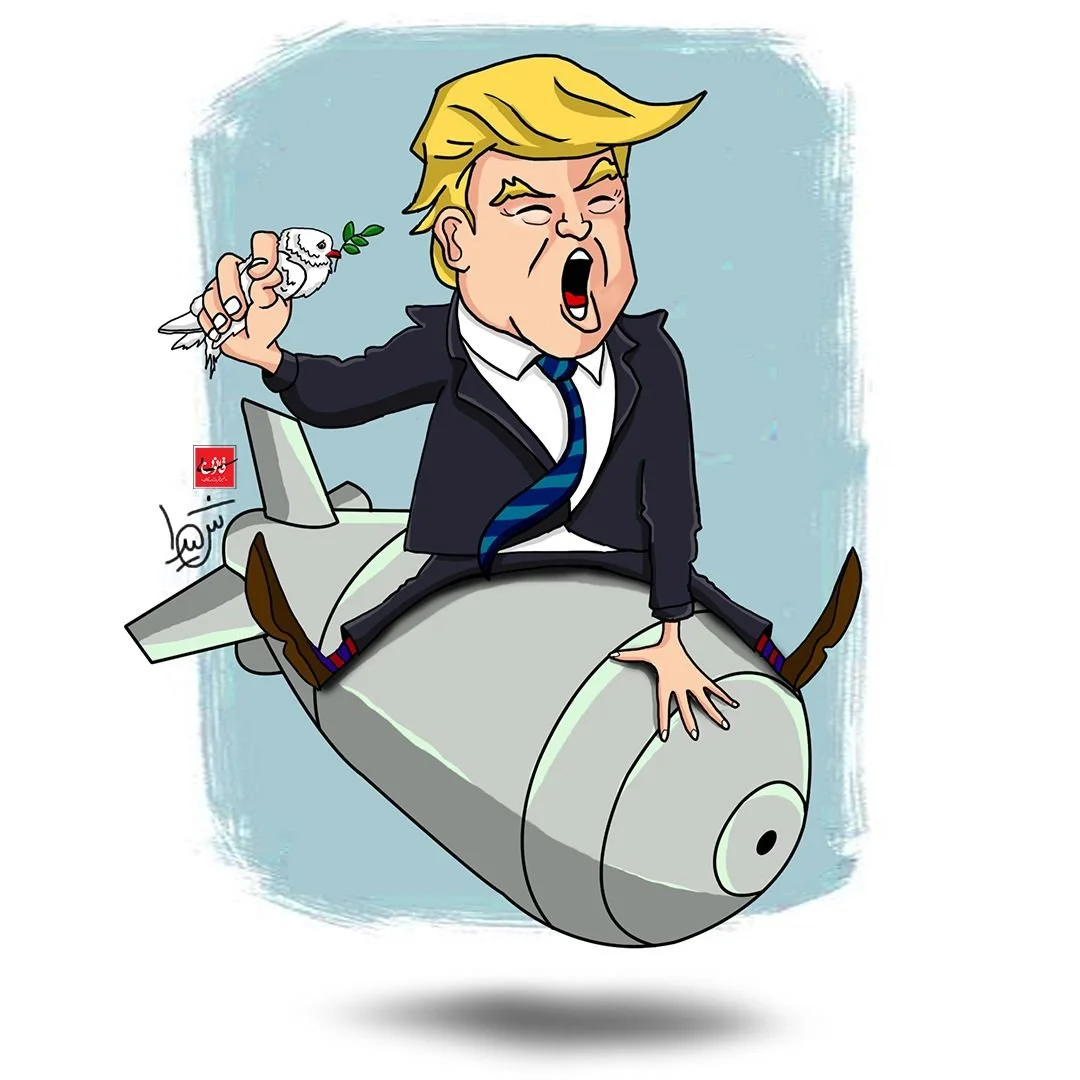
By sheidart
ترامپ و خروج ار برجام
Calling powerful men "crazy" is not radical; it's convenient. It turns a system into a personality, a structure into a symptom and a strategy into a mistake, and just like that, we don't have to look any deeper. Let's be honest, saying Trump or Netanyahu are "psychopaths" doesn't challenge power; it protects it.
Because if the problem is that they're unstable, then the system is still fine. If the problem is their personality, then everything else can stay exactly as it is; we need better people at the top. More reasonable, more democratic and more presentable, we've heard this story before.
Trump didn't come out of nowhere; he's not a glitch, he's the mask slipping. The same machinery was already running, just with better storytelling. Obama didn't dismantle it, and Biden didn't interrupt it. They represent the same system in its "acceptable" version, the version that speaks the language of “democracy” while operating within the same logics of expansion, extraction, and control.
This is exactly where the media step in and quietly do their job — not by outright lying, but by shaping the frame. By obsessing over the leader: the tweets, the tone, the outbursts, the scandals, by psychologising power instead of analysing it. The narrative is always the same: This man is dangerous because he is extreme. Never: This system produces and requires this level of violence. So we keep watching the character rather than understanding the script.
The "mad leader" is a perfect media product. He gives you outrage without analysis and drama without structure. A villain you can hate without questioning the world that made him possible, and most importantly, he keeps the system intact, because once you isolate the individual, you isolate responsibility. It's him. Not us. Not this.
There's also something deeply twisted in the language media use. We reach for psychiatric labels—mad, sick, deranged- to describe men who are not outside the system, but fully aligned with it. Historically, that language was used to discipline those who didn't conform. Now it's being used to explain those who conform perfectly to the most violent logics of power, that's displacement. And here's the real trap: If we believe the problem is the "wrong" leaders, then the solution becomes better leaders. Kinder ones, more diplomatic ones, but the system doesn't change because the tone does, it just becomes easier to accept.
Trump feels different because he's loud, because he says the quiet part out loud, and he doesn't bother translating violence into the language of values, but the violence was already there; he just removed the filter. So no—this isn't about defending anyone, it's about refusing a narrative that makes everything smaller, cleaner, easier to digest, because this isn't an anomaly. This is continuity, and until we stop calling it madness, we'll keep mistaking it for an exception, and exceptions, by definition, don't need to be dismantled.